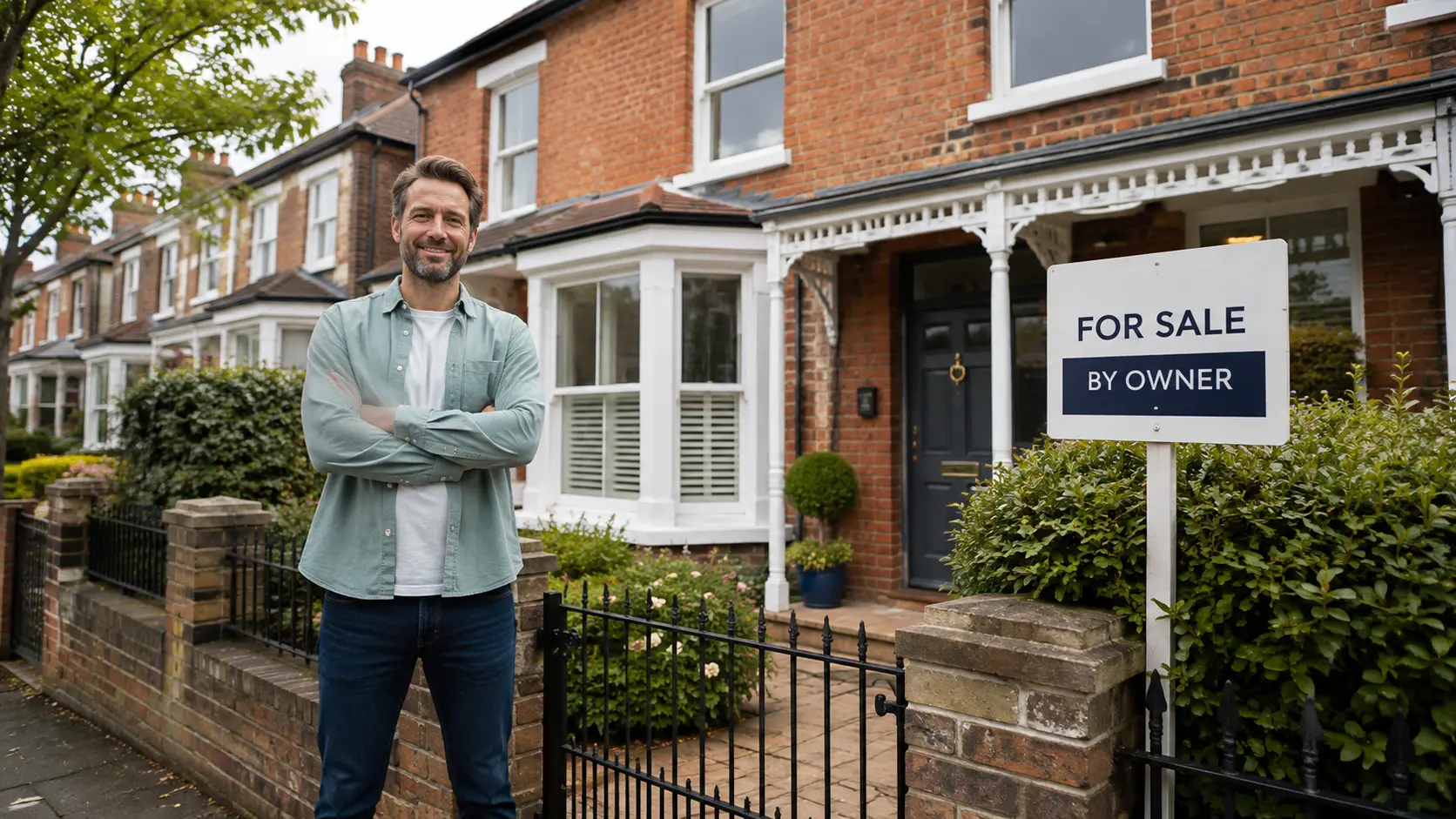
Yes, you can sell a house without an estate agent. In a private sale, you take responsibility for setting the asking price, advertising the property, arranging viewings, speaking directly with buyers and negotiating offers. You will still need to deal with the legal transfer of ownership, and most sellers choose a solicitor or licensed conveyancer to handle that work.
Selling privately can reduce estate-agent commission, but it also means doing more of the work yourself. Before choosing this route, compare the likely saving with the time, marketing reach, negotiation work and sales progression support you would otherwise receive from an agent.
Last reviewed: 25 August 2026. This guide focuses mainly on the selling process in England and Wales. Scotland and Northern Ireland have different property-sale systems and requirements.
How selling a house without an estate agent works
When you use an estate agent, the agent normally handles much of the marketing, buyer communication, viewings, offer negotiation and sales progression. In a private sale, those responsibilities move to you.
You generally need to:
- Work out how much the property is likely to be worth.
- Prepare the documents and information buyers may need.
- Make sure an Energy Performance Certificate is available when required.
- Create the property description, photographs and marketing material.
- Find potential buyers.
- Arrange and conduct viewings.
- Answer buyer questions accurately.
- Receive and negotiate offers.
- Check the buyer’s position before relying on the offer.
- Coordinate with the buyer and both sides’ legal representatives until completion.
The key point is that avoiding an estate agent does not remove the legal process of selling a property. It mainly changes who performs the marketing, negotiation and buyer-management work.
Pros and cons of selling privately
| Potential advantage | Potential disadvantage |
|---|---|
| You may avoid estate-agent commission. | You must handle the marketing and buyer communication yourself. |
| You control the wording, viewing schedule and negotiations. | You may have less exposure to active local buyers. |
| You speak directly with potential buyers. | Direct negotiation can be difficult when emotions are involved. |
| You can choose exactly how and where to advertise. | Some major property portals are normally accessed through agents or approved listing services. |
| A known buyer may make the process simpler. | You still need legal work, paperwork, an EPC where required and sales progression. |
A private sale can make particular sense when you already know the buyer, have strong knowledge of the local market, are comfortable negotiating and have enough time to manage the transaction.
Is selling without an estate agent right for you?
A private sale is most practical when you are comfortable managing the marketing and negotiation yourself, have enough time to respond to buyers, and can keep the transaction organised through to completion.
| A private sale may suit you if… | An estate agent may be more useful if… |
|---|---|
| You already know a credible potential buyer. | You need wider exposure to local buyers. |
| You understand local prices and can research comparables. | You want professional pricing and marketing support. |
| You are comfortable arranging viewings and negotiating. | You would prefer someone else to handle enquiries and negotiations. |
| You can actively chase progress after an offer is accepted. | You want sales-progression support through a chain or complicated transaction. |
This is a practical decision rather than a simple question of avoiding a fee. The best route depends on your property, buyer access, time, confidence and preferred balance of price, speed and effort.
How to sell a house without an estate agent: step by step
1. Check your mortgage and finances
Before marketing the property, ask your lender for the current mortgage balance and check whether early repayment charges or other mortgage fees may apply. This helps you understand the minimum net proceeds you need from the sale.
2. Estimate the property’s value
Research recent sold prices for similar nearby homes, compare current competing listings and consider obtaining professional valuations. GOV.UK suggests researching local sale prices, checking Land Registry information and asking estate agents or a qualified valuer when estimating a home’s value.
3. Gather the paperwork
Prepare title information, planning and building-regulation documents, warranties, guarantees, leasehold information where relevant, and any other documents connected to alterations or ownership. Gathering these early can reduce avoidable delays later.
4. Check the EPC
If the property needs an Energy Performance Certificate, make sure a valid one is available before marketing. An EPC is generally valid for 10 years.
5. Prepare the listing
Create accurate photographs, a clear description, room information and important property details. Avoid hiding significant information or using claims you cannot support.
6. Market the property
Choose suitable advertising channels and make it easy for serious buyers to contact you. Your marketing reach will often be one of the biggest differences between a private sale and an estate-agent sale.
7. Manage viewings and buyer questions
Arrange viewings safely, keep a record of interested buyers and be ready to answer practical questions about the property, tenure, bills, improvements and your preferred timescale.
8. Review and negotiate offers
Price is important, but so is the buyer’s position. Consider whether the buyer has a property to sell, a mortgage decision in principle, a cash position that can be evidenced, and a realistic timeline.
9. Instruct a legal professional
Once you have a buyer, the legal work begins. A solicitor or licensed conveyancer can prepare the contract, respond to legal enquiries, deal with mortgage redemption and manage exchange and completion.
10. Keep the transaction moving
Without an estate agent, there may be no sales progressor chasing the buyer, broker and legal teams. Keep communication organised, but leave legal advice and legal drafting to the appropriate professionals.
How do you set the asking price without an estate agent?
Pricing is one of the hardest parts of a private sale because asking too much can reduce interest, while asking too little can leave money on the table.
Useful evidence includes:
- Recent sold prices for similar properties nearby.
- Current asking prices for genuinely comparable homes.
- Property condition, size, tenure and location.
- Recent improvements or unresolved defects.
- Local demand and how quickly similar homes are selling.
Remember that an asking price is not the same as a guaranteed sale price. If you want an independent professional opinion, you can pay a qualified valuer rather than relying only on your own estimate.
How can you market a house without an estate agent?
A private seller must create enough exposure to reach suitable buyers. Options can include private-sale advertising services, local advertising, social networks, community groups, personal contacts and direct approaches to people who have already expressed interest.
Be careful when comparing listing services. Check exactly what is included, whether the service simply advertises the property or also provides negotiation and sales support, and whether any upfront fee is refundable if the property does not sell.
Good marketing should make the essential facts easy to understand: location, property type, tenure, number of bedrooms, condition, asking price, EPC rating where applicable and how to arrange a viewing.
Do you still need an EPC if you sell without an estate agent?
Usually, yes. GOV.UK states that an EPC is required when selling a property unless an exemption applies, and it should be ordered before the property is marketed. A valid EPC lasts for 10 years, so check whether the property already has one before paying for a new certificate.
The responsibility does not disappear just because no estate agent is involved.
Managing buyer enquiries and viewings yourself
Private sellers need a simple system for handling enquiries. Keep a record of names, contact details, viewing dates and any follow-up questions. Avoid sharing unnecessary personal or financial information.
For viewings, consider having another adult present, keep valuables and sensitive paperwork secure, and confirm who is attending before granting access to the property.
After a viewing, ask whether the buyer wants more information and whether they are in a position to proceed. A high level of interest is useful, but a buyer’s ability to complete the purchase matters more than enthusiasm alone.
How do offers work in a private house sale?
If you are selling privately, buyers can make offers directly to you. You can accept, reject or negotiate an offer.
In England and Wales, an accepted offer is generally not legally binding until contracts are exchanged. That means both sides still need to complete the legal process before the sale becomes binding.
Before relying heavily on an offer, consider asking the buyer to clarify:
- Whether they need to sell another property first.
- Whether they require a mortgage.
- Whether they have a mortgage decision in principle.
- Whether they are a cash buyer and can provide appropriate evidence through the legal process.
- Their preferred timescale.
Do you need a solicitor or conveyancer if there is no estate agent?
An estate agent and a conveyancer perform different jobs. Removing the estate agent does not remove the need to transfer legal ownership correctly.
GOV.UK explains that a legal professional can handle the conveyancing work and that sellers can choose a solicitor, licensed conveyancer or another appropriately qualified legal professional. It is technically possible to do your own conveyancing in some cases, but most sellers use a regulated professional because the transaction involves contracts, title, mortgage redemption, buyer enquiries and transfer of significant sums of money.
Choosing a conveyancer early can also help reduce delays once you find a buyer.
What does it cost to sell a house without an estate agent?
The main saving is usually the estate-agent fee, but a private sale is not cost-free.
You may still need to budget for:
- Solicitor or conveyancing fees.
- An EPC if the existing certificate is missing or expired.
- Property advertising or private-listing services.
- Photography, floor plans or other marketing materials.
- Mortgage exit fees or early repayment charges.
- Leasehold management information or administration fees.
- Repairs, cleaning, storage and removals.
- Tax where applicable.
For a detailed breakdown, read our guide to fees for selling a house in the UK, including legal fees for selling a house, or estimate your own figures with the Selling Costs Calculator.
Common mistakes when selling without an estate agent
- Overpricing: setting the price based on what you need rather than market evidence.
- Weak marketing: saving the commission but failing to reach enough serious buyers.
- Poor buyer qualification: accepting an attractive offer without checking whether the buyer can realistically proceed.
- Slow communication: failing to respond quickly to buyers or legal requests.
- Inaccurate information: making unsupported or misleading claims about the property.
- Ignoring paperwork: waiting until an offer arrives before gathering key documents.
- Underestimating sales progression: assuming an accepted offer will automatically reach completion.
- Trying to handle legal issues informally: relying on buyer-to-seller conversations for matters that need professional legal advice.
For preparation documents that commonly matter during a sale, see documents needed to sell a house in the UK.
Selling privately vs using an estate agent
| Area | Private sale | Estate agent |
|---|---|---|
| Estate-agent commission | Usually avoided | Usually payable under the agent contract |
| Pricing | You research and set the asking price | Agent usually recommends a marketing price |
| Marketing | You arrange it | Agent usually manages listings and promotion |
| Viewings | You arrange and conduct them | Agent may conduct or coordinate them |
| Negotiation | You negotiate directly | Agent normally negotiates between both sides |
| Sales progression | You coordinate progress yourself | Agent may chase the chain and other parties |
| Legal transfer | Still required | Still required |
What if your priority is selling quickly rather than avoiding the agent fee?
A private sale is not automatically the fastest route. If you do not already have a buyer, you still need to generate interest, arrange viewings and negotiate an acceptable offer.
If speed and certainty matter more than avoiding commission, compare the available selling routes rather than assuming a private sale is best. Our sell a house fast in the UK guide compares estate agents, auctions and specialist selling routes, including the trade-offs between price, speed and certainty.
Frequently asked questions
Can I legally sell my house without an estate agent?
Yes. GOV.UK confirms that homeowners can sell their home themselves. You remain responsible for the selling process and legal transfer requirements.
Do I still need a solicitor if I sell privately?
Most sellers use a solicitor or licensed conveyancer to handle the legal transfer, contract, enquiries, mortgage redemption and completion. An estate agent is not a substitute for conveyancing.
Do I need an EPC for a private house sale?
Usually yes, unless an exemption applies. A valid EPC is generally required before a property is marketed and normally remains valid for 10 years.
Can a buyer make an offer directly to me?
Yes. When a property is being sold privately, a buyer can make an offer directly to the seller. In England and Wales, the deal is generally not legally binding until contracts are exchanged.
Is selling without an estate agent cheaper?
It can reduce or remove estate-agent commission, but you may still pay for legal work, an EPC, advertising, photography, mortgage charges, leasehold administration, removals and other sale-related costs.
Is selling privately faster?
Not necessarily. It can be efficient if you already have a suitable buyer, but if you need to find a buyer yourself, limited marketing reach or weak sales progression can make the process slower.